#events: Diversity, Migration and the Future of Anthropology
Hello! This month we have found some great opportunities for you in diverse parts of the world, and given that broad theme of this month’s #events post is…
Hello! This month we have found some great opportunities for you in diverse parts of the world, and given that broad theme of this month’s #events post is…
After quite some time — and without a chance for me to review the final edits (!) — History of Anthropology Review has published my review of David…
Precious Material Over the past decade, the Canadian university-based Epigenetics Lab has become increasingly central to the production of knowledge about human health and development.[1] During m…

Since my very first visit to the Netherlands, I have been surprised at the interest of Dutch people in one of the islands in the North of Russia,…
Processes of globalization—the liberalization of national markets, the rapid movement of goods, services, and labor across national borders—have had profound impacts on local contexts, perhap… Visit New Books…

The Egyptians began constructing Karnak temple around 4,000 years ago. Archaeological evidence suggests large-scale religions arose throughout the world by 4,000 to 8,000 years ago. Christoph…

Due to the generosity of an anonymous donor, we have changed the name of the APLA book prize to the “APLA Book Prize in Critical Anthropology.” APLA is…
In Phenomenal Justice: Violence and Morality in Argentina (Rutgers University Press, 2020), Eva van Roekel grounds her research in phenomenological anthropology and the anthropology of emotio… Visit New…
“[…] I will preserve and protect The honour and independence of my country With my life!” First light: a deep purple over the edge of the camp, as…

Grenzen haben sich geöffnet, Gesellschaften haben sich internationalisiert, die sozialen Schichten aber schotten sich neuerdings rigoros voneinander ab. Bi-kulturelle Paare werfen da die Frage nach Gl…

Somewhere I have a photograph of a piece of graffiti from Kolkata in the early 1990s. It shows three palms behind a brick wall on which is painted…
THIS is what transformed humanity between 300,000 and 100,000 years ago – the development of a cultural system of environmental management that made the ecosystems of the world…
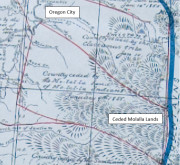
The Molala (Mollala, Molalla, Molele, La’tiwi) are a tribe of Western Oregon. They lived on the eastern periphery of the Willamette and Umpqua Valleys. There were at least…
© Staatliche Museen zu Berlin, Ethnologisches Museum Im Ethnologischen Museum zeugen Gegenstände aus Glasperlen von weltweiten Handelsbeziehungen. Vier Perlenschurze aus Amazonien sind derzeit im Bode-…
In the early 1980s, researchers at Tygerberg Hospital in Cape Town, South Africa were confounded by the persistent failure of their experimental mice embryos. The researchers had hoped…
In Cultures of Doing Good: Anthropologists and NGOs, editors Amanda Lashaw, Christian Vannier and Steven Sampson bring together contributors to advance the growing field of NGO anthropology. Written b…
Imagining Religious Communities: Transnational Hindus and their Narrative Performances (Oxford University Press, 2019) tells the story of the Gupta family through the personal and religious n… Visit New…
How does the world of book reviews work? In Inside the Critics’ Circle: Book Reviewing in Uncertain Times (Princeton University Press, 2020), Phillipa Chong, assistant professor in sociology…
When I agreed to write this post in January, I could not have imagined that I would be doing so in quarantine. The state of the coronavirus continues…
David A. Varel. The Lost Black Scholar: Resurrecting Allison Davis in American Social Thought. 304pp., 16 halftones, notes, index. University of Chicago Press, 2018. $45 (cloth) David Varel’s…
WRITTEN BY BRAM VAN DER HEIJDE Since the 17th of October, the Lebanese streets have been filled with demonstrators trying to ‘take down the sectarian system’ that has…